 Alexander wan2ted Evsin
"Do they ask to see a first aid kit at the Georgian border?" Drivers have been asking questions like this on the Russian-language Q&A site TravelAsk from 2023 to 2026: about the border, about the technical inspection, about police stops. The answers are usually short: "No", "Not needed", and sometimes with a caveat: "But you should have one".
The question keeps coming back for a reason: Georgia's rules on first aid kits have changed several times since 2000, and the neighbouring countries have rules of their own. In this article we explain what Georgian law requires today, in which neighbouring countries a kit is mandatory, what goes into it according to official lists, and what a driver must do if someone is injured in a crash.
First aid kits in Georgian rules
Vehicle equipment requirements in Georgia are set by several documents: the Law on Road Traffic, the rules for carrying passengers and the regulation on technical inspection. They treat the first aid kit differently.
How it used to be
In 2000 a kit was required in every vehicle. Order No. 142 of the Minister of Internal Affairs of 18 April 2000 put a missing kit on the list of faults that bar a vehicle from use:
7.7 არ არის: ავტობუსებზე, მსუბუქ და სატვირთო ავტომობილებზე, ბორბლიან ტრაქტორებზე სამედიცინო მცირე აფთიაქი, ცეცხსაქრობი, საავარიო გაჩერების ნიშანი (მოციმციმე წითელი ფარანი).
7.7. Missing: on buses, passenger cars, trucks and wheeled tractors — a small medical first aid kit, a fire extinguisher, a warning sign (flashing red lamp).
Order of the Ministry of Internal Affairs of Georgia No. 142, Annex 1
The same set of a first aid kit, a fire extinguisher and a warning triangle was required by the vehicle roadworthiness rules: a 2011 order of the Ministry of Economy and Government Resolution No. 30, in force from 2014 to 2017.
Since 1 January 2018 Georgia has had a regulation on periodic technical inspection, approved by Government Resolution No. 510. Its list of checks includes a fire extinguisher, a warning triangle and a first aid kit. The kit is checked visually. If it is "missing, incomplete or does not meet the requirements", this is recorded as a defect. Mandatory inspection was introduced in stages, and in 2019 it became mandatory for all vehicles.
In May 2019 the Sputnik agency, citing a study by the Georgian Alliance for Safe Roads, reported how some drivers passed the check:
Некоторые автомобилисты одалживают или арендуют необходимые для прохождения обязательного технического инспектирования запчасти и приборы, а потом вновь пользуются своими старыми… Речь идет о покрышках, фарах, огнетушителе, аптечке.
Some motorists borrow or rent the parts and equipment needed to pass the mandatory technical inspection and then go back to their old ones… This concerns tyres, headlights, fire extinguishers and first aid kits.
Sputnik Georgia, 29 May 2019
What changed in 2020 and 2021
In September 2020 the government, by Resolution No. 554, exempted passenger cars (category M1) and light commercial vehicles (N1) from inspection of the extinguisher, warning triangle and first aid kit until the end of 2021. In December 2021, Resolution No. 567 made the exemption permanent. The regulation now reads:
Regulation on periodic technical inspection, Article 8
M1 და N1 კატეგორიის სატრანსპორტო საშუალებებისათვის სავალდებულო არ არის: … ბ) ამ რეგლამენტის დანართ №1-ის 7.2, 7.3, 7.4 გრაფებით გათვალისწინებული დებულება.
The following are not mandatory for vehicles of categories M1 and N1: … b) the provisions of items 7.2, 7.3 and 7.4 of Annex No. 1 to this regulation.
Items 7.2, 7.3 and 7.4 are the fire extinguisher, the warning triangle and the first aid kit. Neither the Law on Road Traffic nor the Code of Administrative Offences requires them in a passenger car, so there is no fine for driving a passenger car without a first aid kit.
Who must carry a kit today
A first aid kit is mandatory in three cases:
- Buses. Under the rules for the carriage of passengers and luggage, a bus must have a fire extinguisher, a warning triangle and a first aid kit. The same rules do not require a kit in taxis, and neither do Tbilisi's taxi rules.
- Dangerous goods. The technical regulation requires a first aid kit on every vehicle carrying such goods.
- School and kindergarten trips. Under Article 46¹ of the Law on Road Traffic, a vehicle carrying children on an excursion must have a fire extinguisher and a first aid kit. A driver who breaks the requirements of this article faces a fine of 200 lari under Article 127¹ of the Code of Administrative Offences, and 400 lari for a repeat offence.
Checks at the border, on the road and at inspection
Since the law does not require a kit in a passenger car, neither border guards, nor the patrol police, nor inspection centres have to check for one. Drivers who entered Georgia in their own cars write that nobody asks for it. A TravelAsk user's answer to the question of whether you are asked to show a first aid kit at the Georgian border:
Нет. И огнетушитель тоже. Но иметь надо.
No. Same with the fire extinguisher. But you should have one.
Evgeny, TravelAsk
Asked whether a first aid kit and an extinguisher are needed at the Russia–Georgia border, another user of the same site replied:
Не нужна
Not needed
Kirill, TravelAsk
In 2026 a TravelAsk user asked whether an extinguisher, a warning triangle and a first aid kit are mandatory for the Georgian technical inspection. The answer was short:
Нет
No
Vadym, TravelAsk
On the road, the patrol police check documents. Here is a TravelAsk user's answer to the question of whether Georgian rules require a warning triangle, an extinguisher and a first aid kit:
Несколько раз остонавливали вообще об этом не спрашивали только права и техпаспорт думаю что нет.
I was stopped several times, they never asked about it, only the licence and the registration certificate, so I think no.
Esenia, TravelAsk
Where a kit is mandatory abroad
Abroad, a driver follows the rules of the country they have entered. A car rented in Georgia can only be taken to Armenia, and the rental company arranges a permit for that in advance. We covered this in our article on driving to Armenia. If you come to Georgia in your own car, it helps to know the rules of Russia, Turkey and Armenia.
Armenia
In Armenia a first aid kit is mandatory. Government Decision No. 955-N lists a missing kit among the faults that bar a vehicle from use:
Decision of the Government of Armenia No. 955-N, Annex 2
բացակայում են
ա. բժշկական դեղատուփը, կրակմարիչը, վթարային կանգառի նշանը (թարթող կարմիր լապտերիկ)ավտոբուսներում, թեթև մարդատար և բեռնատար ավտոմոբիլներում ու անվավոր տրակտորներում…Missing: a) a medical first aid kit, a fire extinguisher, a warning sign (flashing red lamp) — in buses, passenger cars, trucks and wheeled tractors…
Driving with such a fault carries a fine of 5,000 drams under Article 123 of Armenia's Code of Administrative Offences. If the fault cannot be fixed on the spot, a driver who fixes it within 24 hours and shows proof is released from the fine. The kit, extinguisher and warning sign are also checked at Armenian technical inspection: they are on the list of checks.
Turkey
In Turkey a first aid kit is mandatory too. Under Article 31 of Road Traffic Law No. 2918, since 27 February 2026 a driver without the required equipment faces a fine of 1,000 lira; fine amounts are revised every year on 1 January. The contents of the kit are set by the regulation on health requirements for drivers. Besides the kit, the road traffic regulation requires a passenger car to carry a dry powder extinguisher of at least 1 kilogram and two warning triangles.
Russia
In Russia, since 1 September 2023 the first aid kit has not been on the list of faults that bar a vehicle from use. On that day a new version of the list, approved by Government Resolution No. 837, came into force. So there is no longer a roadside fine for not having a kit. However, the Customs Union technical regulation still requires a kit in vehicles registered in the union's member states, and it is checked at Russian technical inspection.
What goes into a car first aid kit
Georgia has no set contents for a passenger car kit. Other countries have official lists. The table shows three of them: Russian Health Ministry Order No. 260n, in force since 1 September 2024, the Turkish regulation, and the German standard DIN 13164 in its 2022 edition, as described by the German medical technology association BVMed. Kits with these contents are sold in Georgia too, for example at the RPM car accessories shop in Batumi.
| Item | Russia | Germany (DIN 13164) | Turkey |
|---|---|---|---|
| Medical gloves | 2 pairs | 2 pairs | 2 pairs |
| Medical masks | 2 | 2 | — |
| Rescue breathing device | 2 | — | — |
| Tourniquet | 1 | — | 2 |
| Bandages | 6 | 5 | 2 |
| Sterile wipes or compresses | 2 packs of 10 | 6 | box of 50 |
| Dressing packs | — | 4 | — |
| Triangular bandage | — | 1 | 3 |
| Adhesive tape roll | 1 | 1 | 1 |
| Wound plasters | — | 14 | 10 |
| Blanket | 1 | 1 | 1 |
| Scissors | 1 | 1 | 1 |
| Antiseptic | — | — | 50 ml |
| Safety pins | — | — | 10 |
| Wet wipes | — | 2 | — |
| Torch | — | — | 1 |
| First aid instructions | 1 | 1 | — |
The Turkish list has two tourniquets: an Esmarch bandage and a fabric tourniquet. The blanket in the Russian and German lists is a rescue blanket that keeps an injured person warm; in the Turkish list it is an aluminium burn blanket. None of the three lists includes pills or other medicines.
Old kits in Russia and Germany do not have to be replaced straight away. In Russia, kits assembled under the previous Order No. 1080n may be carried until the contents expire, but no later than 1 September 2027. For kits under the German standard, BVMed writes that there is no obligation to replace or top up old kits after the 2022 edition.
If someone is injured in a crash
The law does not oblige drivers to carry a kit, but it does oblige them to help the injured. Article 27 of the Law on Road Traffic lists the duties of a driver involved in a crash. One of them:
ე) მიიღოს საჭირო ზომები, რათა პირველადი სამედიცინო დახმარება აღმოუჩინოს საგზაო-სატრანსპორტო შემთხვევის შედეგად დაშავებულს, გამოიძახოს სასწრაფო სამედიცინო დახმარება, გადაუდებელი აუცილებლობის შემთხვევაში დაშავებული გაგზავნოს უახლოეს სამკურნალო დაწესებულებაში გზად მიმავალი სხვა სატრანსპორტო საშუალებით, ხოლო თუ ეს შეუძლებელია − თავად წაიყვანოს იგი…
e) take the necessary measures to give first aid to a person injured in the crash, call an ambulance, and in an emergency send the injured person to the nearest medical facility in a passing vehicle, or, if this is impossible, take them there personally…
Law of Georgia on Road Traffic, Article 27
The driver must not take the injured person to hospital personally if there is reasonable suspicion that moving them could cause harm. A driver who has gone to the hospital must identify themselves there, show their documents and, if possible, return to the scene.
The crash scene is marked with a warning triangle: under Article 52 of the same law it is placed at least 15 metres from the car in a built-up area and 30 metres outside one. If there is no triangle, the driver must warn other drivers by another visible means.
Leaving the scene of a crash carries a fine of 250 lari and a six-month driving ban under Article 123 of the Code of Administrative Offences. Failing to help a person whose life is in danger is punishable under Article 129 of the Criminal Code by up to two years in prison. What else to do after a crash in a rental car, we covered in our article on accidents in a rental car.
Ambulance: number, cost, waiting time
In Georgia an ambulance, the police and the fire service are called on the single number 112. This is set by the law on the 112 centre: the centre receives calls and passes them to the right service.
An ambulance call is free for everyone in Georgia, foreigners included. This follows from the state healthcare programme for 2026, which names all "persons present on the territory of Georgia" as recipients of emergency care. In a Reddit discussion about how much an ambulance costs in Tbilisi, one user replied in August 2026:
Ambulance is free. They come, do whatever they can, they leave. Done.
Reddit user, r/tbilisi
Hospital treatment for a foreigner is paid by their medical insurance, which has been mandatory for entering Georgia since 2026. We covered it in our article on mandatory insurance.
Average ambulance arrival times are not officially published. In response to a freedom of information request in November 2022, the 112 centre replied that it cannot give an average arrival time: the crew sets off after the centre has passed the call to the ambulance service.

The road to Ushguli, 2009. Photo: deguonis, Wikimedia Commons
Reaching some mountain villages takes an ambulance more than an hour. In October 2024 the outlet mtisambebi.ge reported that emergency crews need at least an hour to reach villages around Ushguli and Khaishi in Svaneti. Mimoza Chkadua, a resident of Khaishi, told the outlet:
ზუგდიდიდან რომ სასწრაფო დახმარების მანქანა ამოვიდეს, 70 კილომეტრია აქამდე, ჯვარიდან 45. მესტიიდან კიდევ უფრო აგვიანებს.
If the ambulance comes from Zugdidi, it is 70 kilometres to us, from Jvari it is 45. From Mestia it is even later.
mtisambebi.ge, 14 October 2024
About the village of Vedi in the same Khaishi community, she said that people there drive the patient towards the ambulance in their own car:
ვედში თუ ვინმე ცუდად გახდა, კი ურეკავენ სასწრაფოს, მაგრამ მის ასვლას არავინ ელოდება. საკუთარი მანქანით ავადმყოფი მიჰყავთ, რომ გზაში შეახვედრონ.
If someone in Vedi falls ill, they do call an ambulance, but nobody waits for it to come up. They take the patient in their own car to meet it on the way.
mtisambebi.ge, 14 October 2024
Frequently asked questions
Is a first aid kit mandatory in a car in Georgia? Not in a passenger car. A kit is mandatory in buses, in vehicles carrying dangerous goods and in vehicles taking children on school or kindergarten trips.
Is there a fine in Georgia for not having a first aid kit? Not for a passenger car. A driver taking a school trip without a first aid kit and an extinguisher faces a fine of 200 lari, and 400 lari for a repeat offence.
Is a first aid kit needed for technical inspection in Georgia? Not for passenger cars. They were exempted from inspection of the first aid kit, extinguisher and warning triangle in September 2020, and since December 2021 the exemption has been permanent.
Do they ask for a first aid kit at the Georgian border? No. Drivers who entered Georgia from Russia in their own cars write that nobody asked them for a kit or an extinguisher.
Do I need a first aid kit to drive a rental car to Armenia? Yes. Under Armenian rules a first aid kit, an extinguisher and a warning triangle are mandatory, and the fine for not having them is 5,000 drams. It is best to discuss the car's equipment with the rental company when arranging the permit to leave Georgia.
How much does a car first aid kit cost in Georgia? From 25 to 112 lari as of 28 October 2026. A Moje Auto kit at the RPM car accessories shop in Batumi costs 25 lari, a car kit at the PSP pharmacy chain 34.61 lari, and an original Lexus kit from the official dealer 112 lari.
Is the ambulance free for tourists in Georgia? The call and the crew's help are free for everyone in Georgia. The number is 112. Hospital treatment for a foreigner is paid by their medical insurance.
Is there a first aid kit in a rental car? The law does not oblige Georgian rental companies to provide one, and rental terms usually do not mention it. If you need one, ask for it when booking.
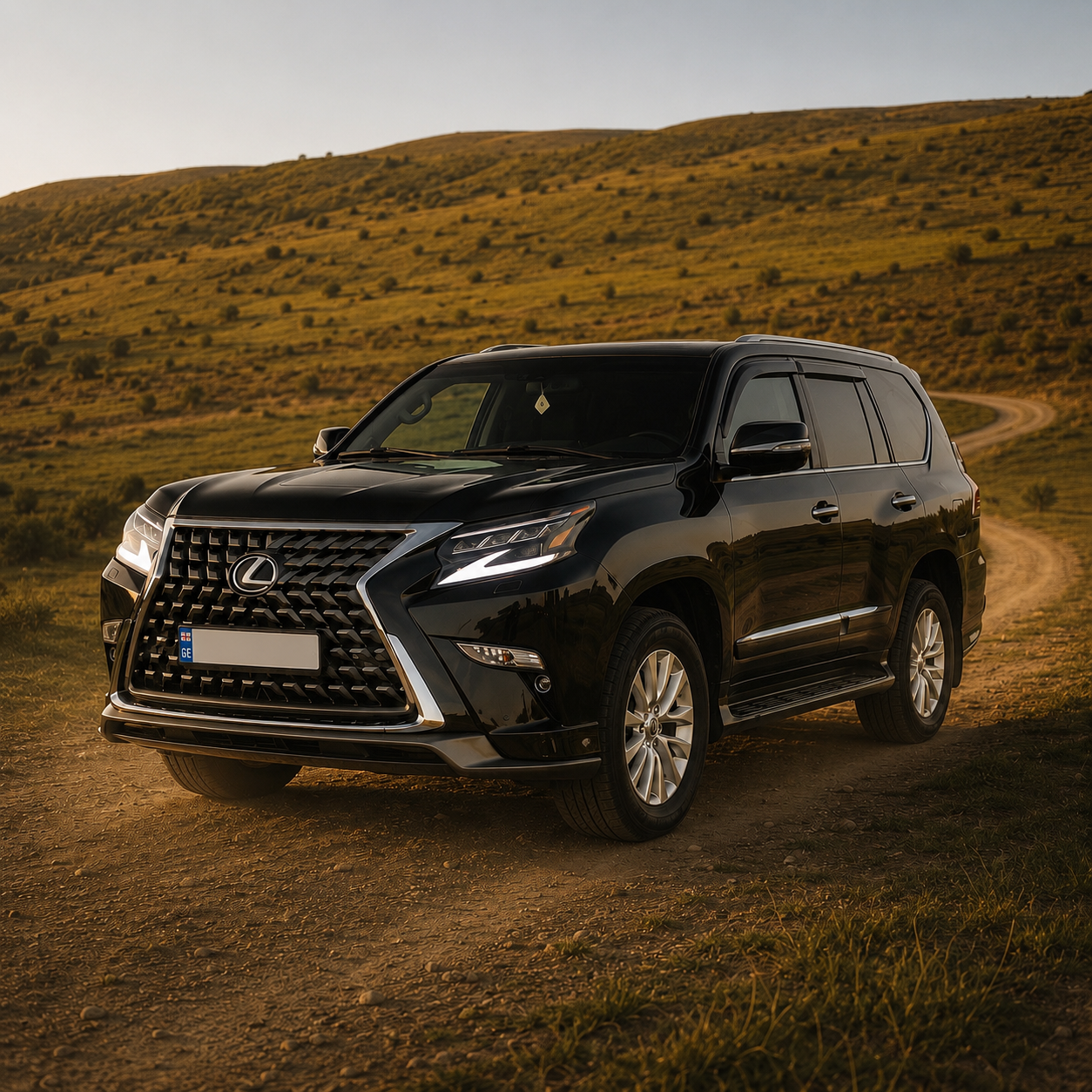
The Tbilisi fleet includes cars for mountain roads, among them the Toyota Land Cruiser Prado, Lexus GX 460 and Toyota Land Cruiser 300. Within Tbilisi a car is delivered in about half an hour; terms are on the delivery page. If you would rather not drive yourself, you can book a car with a driver.
The concierge answers on WhatsApp and Telegram at +995 557 437 034 and by email at hello@autohub.rent. Name the model and dates; documents and deposit are checked before delivery.
Cover photo: a road in Svaneti. DDohler, Wikimedia Commons