 Alexander wan2ted Evsin
Every guide to driving in Georgia in winter reaches the same nine words and stops there: winter tires are mandatory on some mountain roads.
The sentence is true and nearly useless. Which roads? What counts as a winter tire? How much is the fine? And the question that actually changes your morning when the car is rented: if the tires are wrong, who pays?
The rule behind those nine words is far more precise than the guides suggest. It names road sections. It sets a tread depth in millimetres, an age limit in years, and one symbol that has to be moulded into the sidewall. The penalty is 100 GEL and five licence points, and points attach to the person holding the licence at the roadside. In a rental car, that person is you.
Quick answer
From 1 December to 1 March, Georgian law requires winter tires on named sections of road, including the Mtskheta to Stepantsminda highway that carries every skier through Gudauri to Kazbegi. The tire has to carry the snowflake symbol, keep at least 3 mm of tread on a car, and be under ten years old. Getting it wrong costs 100 GEL and five licence points, and on a rental the driver absorbs both. Verify the tires at handover, not at the police stop. See our Gudauri and Kazbegi pages, or read rent a car or hire a driver in Georgia if the pass is the part you are unsure about.
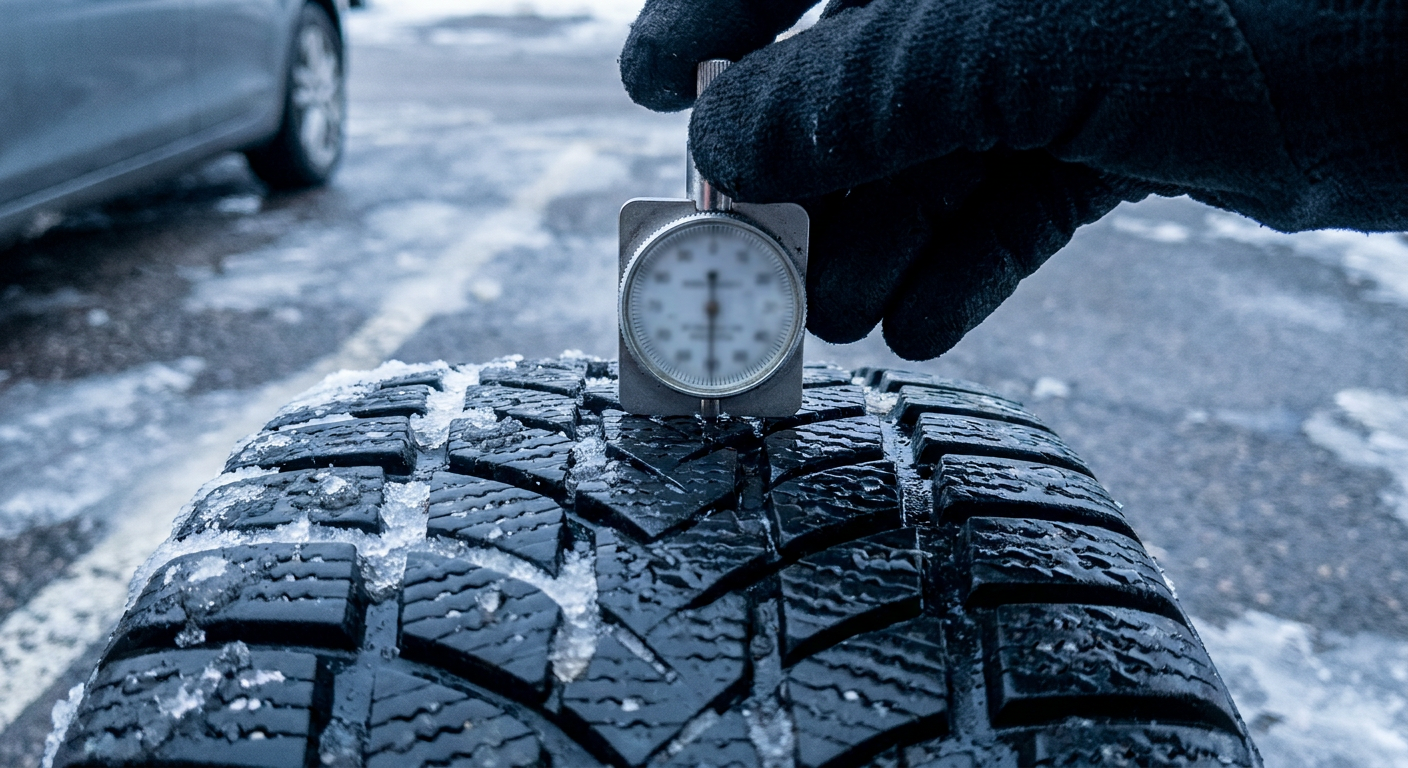
Three millimetres is the number to hold on to. It is roughly double the 1.6 mm legal floor most European drivers carry in their heads, and a set of tires that passed a summer inspection can fail this one.
What the winter tire law in Georgia actually specifies
The requirements come from the Ministry of Internal Affairs and the government resolution behind it, not from rental-industry custom. They are testable at the roadside with a gauge and a pair of eyes.
| Requirement | Cars (M1), trucks (N1, N2, N3) | Minibuses (M2), buses (M3) |
|---|---|---|
| Period in force | 1 December to 1 March | 1 December to 1 March |
| Sidewall marking | snowflake symbol required | vehicles over 3.5 t may run unmarked winter tires with chains fitted |
| Minimum tread depth | 3 mm | 4 mm |
| Maximum tire age | 10 years from manufacture | 10 years from manufacture |
| Manufacture date | must be legible on the sidewall | must be legible on the sidewall |
| Penalty | 100 GEL and 5 licence points | 100 GEL and 5 licence points |
| Escalation | vehicle may be held in a guarded lot | vehicle may be held in a guarded lot |
Three details in that table are the ones travellers get caught by.
The marking is the snowflake, not the letters M+S. The symbol is a three-peak mountain with a snowflake inside it, moulded into the sidewall. M+S is a manufacturer's own claim about mud and snow, applied without a standardised test, and it appears on plenty of all-season rubber that has never been near a snow-traction assessment. On a Georgian road section in December, the officer is looking for the snowflake.

The age limit is real and it is checkable. A tire manufactured more than ten years ago fails regardless of how much tread is left, and the manufacture date has to be readable. That second half matters more than it sounds. Sidewalls scuffed against Tbilisi kerbs for six winters can lose the date code entirely, and an unreadable date is itself a defect under the rule.
Tread is measured per tire, not per car. Three good corners and one worn one is a failed vehicle.
Which roads require winter tires in Georgia
This is where the published guides go quiet and where the law is loudest. The sections announced for the most recent winter season are specific enough to plan around.
| Route | Section where winter tires are required | Why you would be on it |
|---|---|---|
| Mtskheta to Stepantsminda to Larsi | Mleta to Kobi | The Georgian Military Highway. Every trip to Gudauri and Kazbegi crosses it |
| Tbilisi to Senaki to Leselidze | Osiauri junction to Surami junction; Rikoti tunnel to Tseva | The main east to west artery towards Kutaisi and the Black Sea |
| Khashuri to Akhaltsikhe to Vale | Kvishkheti to Vale | The approach to Borjomi, Bakuriani and the southern resorts |
| Tbilisi bypass road | Zahesi to Rustavi | Ordinary traffic around the capital, not a mountain road at all |
| Ponichala to Marneuli to Guguti | Dmanisi bypass to Guguti | The southern route towards the Armenian border |
| Akhaltsikhe to Ninotsminda | Akhaltsikhe to the border | The Javakheti plateau, the coldest inhabited part of the country |
| Akhalkalaki to Kartsakhi | Akhalkalaki to the border | The Turkish border crossing |
Look at the fourth row again. The Tbilisi bypass between Zahesi and Rustavi sits at city altitude, nowhere near a ski resort, and it carries the same obligation as the Jvari Pass. A driver who reads "mountain roads" and equips accordingly can still be non-compliant on a flat road twenty minutes from the airport.
The rule is written as a schedule of road sections rather than a description of terrain. What triggers it is the stretch of tarmac under your wheels, whatever the altitude on the sign.
The seven sections above are the ones the authorities publicise each December. They are not the whole schedule. The underlying instrument is Government of Georgia Resolution No. 526 of 27 December 2023, in force since 1 January 2024, and its annex runs to roughly forty-six sections once the domestic road network is counted alongside the international routes. If your itinerary leaves the main corridors, the annex is the document to open rather than any blog, including this one.
Do chains satisfy the rule instead of winter tires?
On a car, no.
This is the single most repeated error in English-language advice about Georgia, and it survives because it is half true for the vehicles most visitors never drive. Chains replace snowflake-marked tires only for vehicles over 3.5 tonnes, and only when the chains are fitted to every tire on the driving axle. For a passenger car, chains are an addition to compliant tires, never a substitute for them.
They can also become compulsory on top of the tires. Patrol officers retain discretion to require chains when conditions demand it, which means a car that satisfies the written rule in the morning can be turned back in the afternoon.
The confusion is visible in the wild. In a thread on r/Sakartvelo about snow chains, the most confident reply tells a visitor that chains are not required anywhere and that the snowflake "and/or M+S marking" is what matters. The M+S half of that sentence is wrong, and it is the kind of wrong that costs 100 GEL.
What changes when the car is a rental
Here is the part no competitor page answers.
A tire violation is recorded against the driver. The 100 GEL is payable by the person stopped, and the five licence points come off that person's record. The rental company owns the car and chose the tires; the driver carries the consequence. If the officer decides that letting the vehicle continue would endanger others, the car goes to a guarded lot, and everything that follows is a conversation between you, the rental desk, and your afternoon.
That asymmetry is why tire compliance belongs in the same category as the deposit and the insurance paperwork: something you confirm before you drive away, not something you assume because it is December and the company knows the country.
The same Reddit thread contains the sentence that sums up the whole problem. A traveller planning Stepantsminda, Mestia and Tetnuldi writes:
"I see. But I cannot check it before I take the car."
He can, and it takes four minutes. That is the rest of this article.

The handover checklist you can run in the parking lot
Do this before you sign, while the person who handed you the key is still standing next to you. No tools beyond a coin and a phone.
WINTER TIRE HANDOVER CHECK: 4 minutes, all four corners

1. SNOWFLAKE      Find the three-peak mountain + snowflake on each sidewall.
                  M+S alone does not count. No symbol = not a winter tire.

2. DATE CODE      Find the oval stamp with 4 digits: WWYY (week, year).
                  "3419" = week 34 of 2019. Must be under 10 years old.
                  Cannot read it? That is a defect in itself.

3. TREAD          3 mm minimum on a car. Insert a coin in the main groove
                  and compare depth across all four tires. Uneven or shallow
                  on one corner = the whole car fails.

4. MATCHED SET    All four should be winter tires. Two winter + two summer
                  is both non-compliant and genuinely dangerous on a pass.

5. PHOTOGRAPH     Shoot each sidewall showing the symbol and the date code,
                  plus the odometer. Timestamped, before you drive away.

6. ASK, IN WRITING
                  - Are these tires compliant for the December-to-March rule?
                  - Are chains in the car, and do they fit these wheels?
                  - Who pays a tire-related fine, me or you?
                  - Does an incident on non-compliant tires affect the CASCO claim?
Step five is the one people skip and later wish they had not. A timestamped photo of a compliant sidewall taken at handover ends any argument about the car's condition when it left the lot, and it costs you thirty seconds.
Step six is the one that separates operators. A rental desk that answers all four questions without hesitation is telling you something about how the fleet is run in winter. One that waves them away is telling you something too.
Do you actually need a 4x4 in Gudauri?
The law has nothing to say about drivetrain. It regulates the four contact patches and nothing above them, so a front-wheel-drive hatchback on compliant winter tires is legal on the Mleta to Kobi section and an all-wheel-drive SUV on summer tires is not.
Practice is a separate question, and the people who drive it every winter are consistent about where the line falls. In a January thread on r/Sakartvelo, a local answers a visitor asking exactly this: for Stepantsminda itself a 4x4 is not strictly necessary and depends on conditions on the Jvari Pass, but for the climb to Gergeti Trinity Church "you definitely need a 4x4". Another regular adds that on a cleared tarmac road almost anything gets up, and that ice changes the answer completely.
The honest summary is that winter tires decide whether you are legal and whether you stop, and drivetrain decides whether you keep moving on an uncleared gradient. Both matter on the Military Highway, and they matter for different reasons.
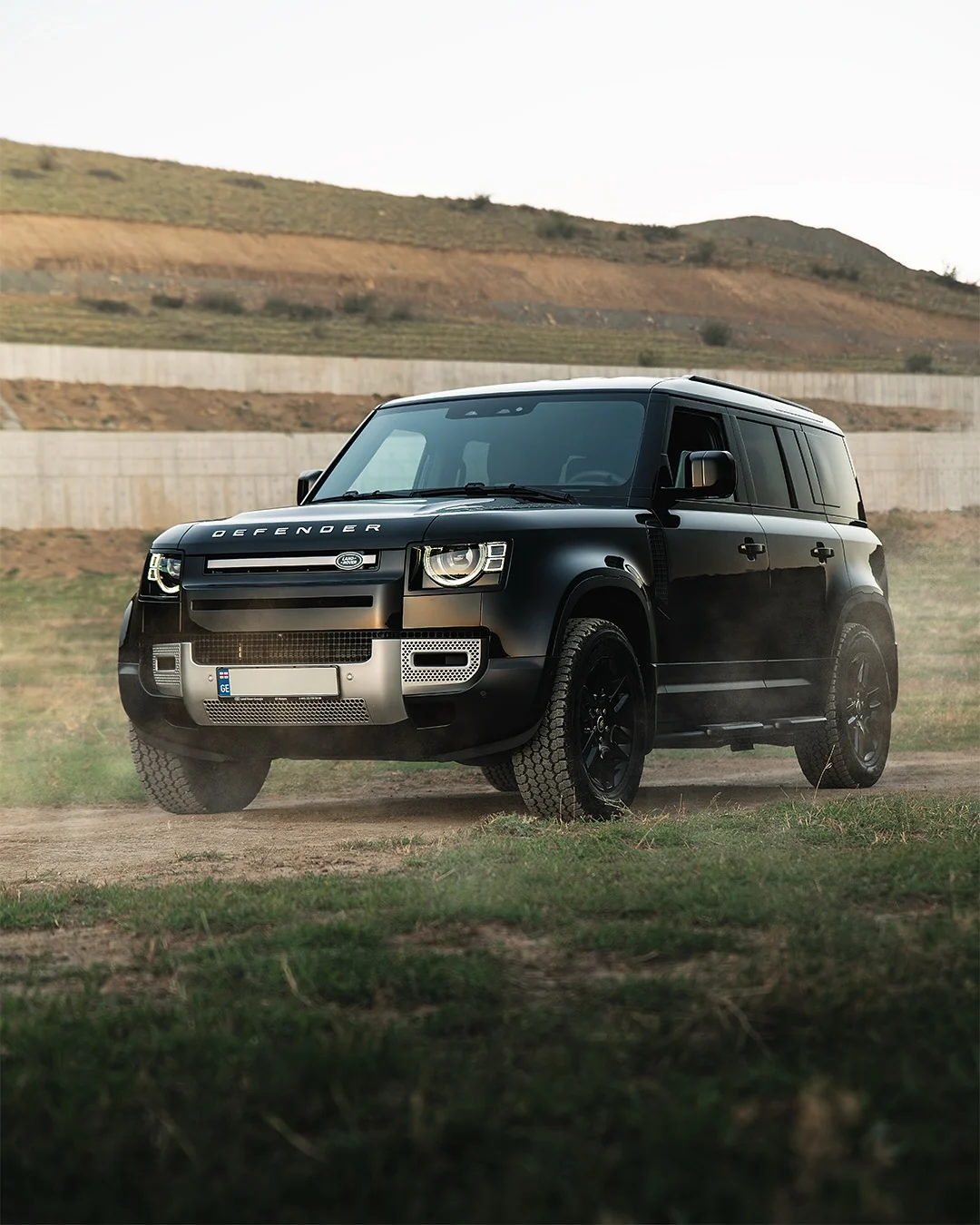
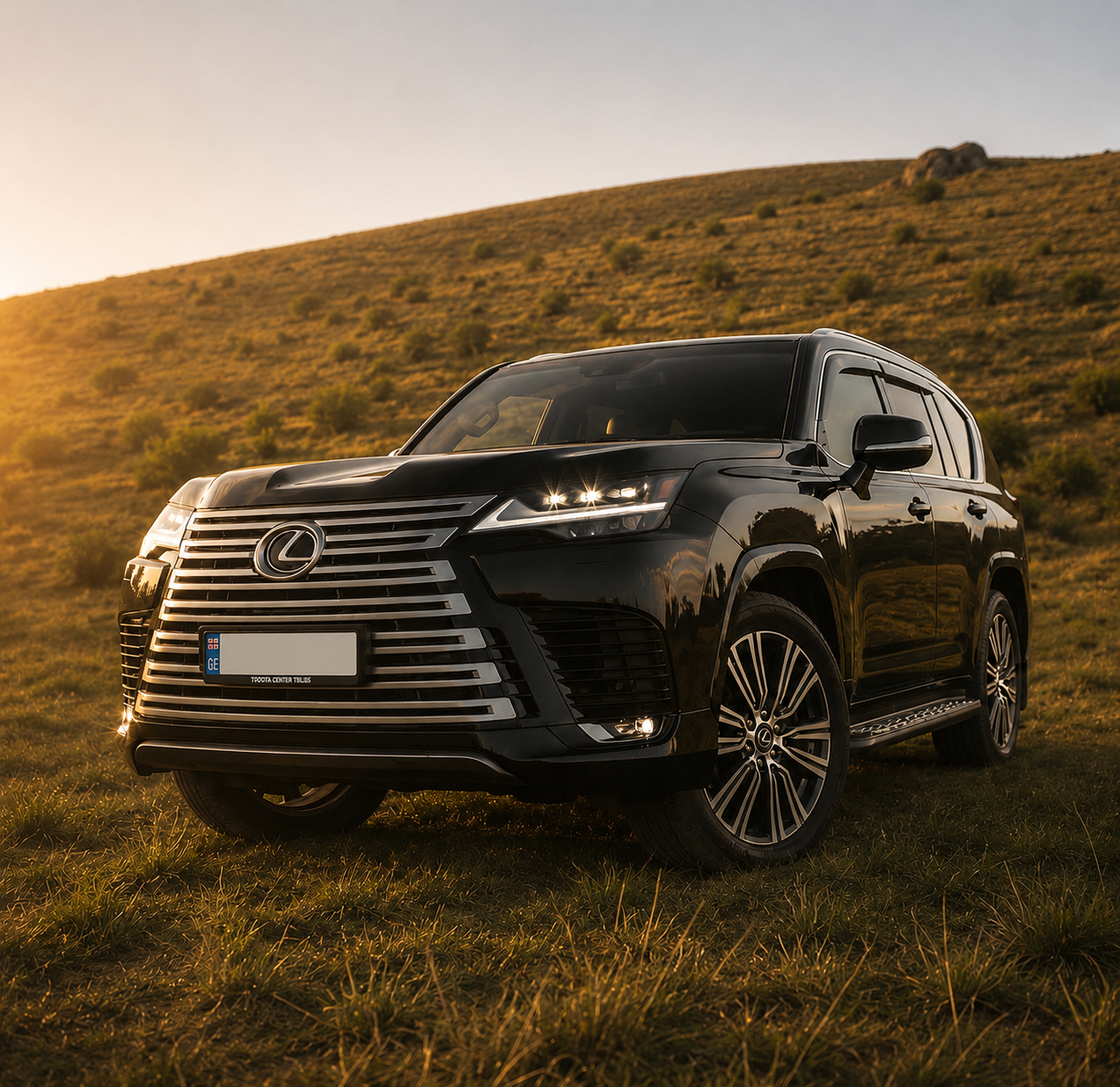
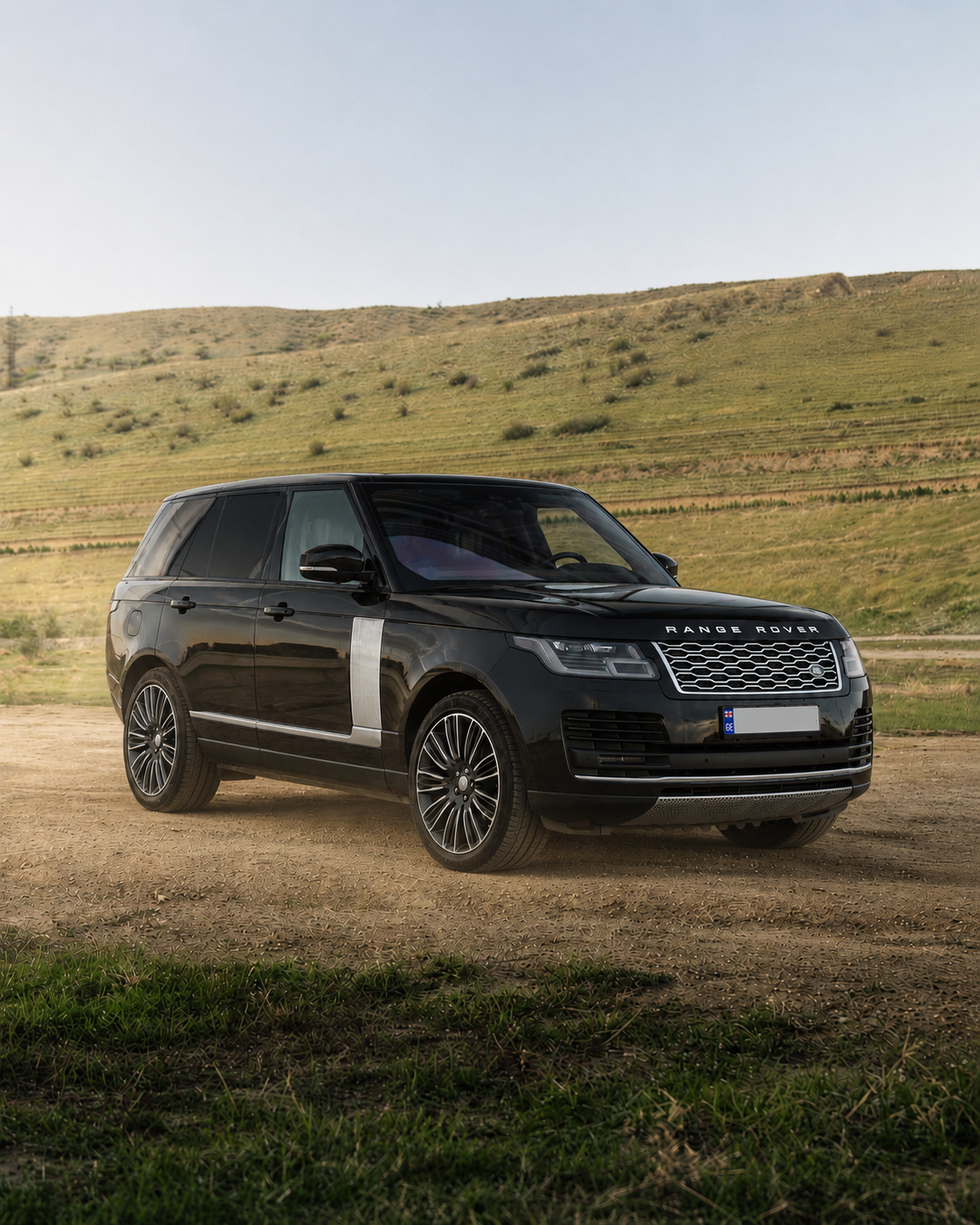
If the plan involves the pass in January, the vehicles built for it are the ones with permanent all-wheel drive and real ground clearance: the Toyota Land Cruiser Prado from $200 per day, the Land Cruiser 300, the Defender, the Lexus LX600 and the Range Rover Vogue. Twenty-eight of the forty-three cars in our fleet are SUVs, which is less a marketing fact than a description of what this country's roads ask for five months a year.
And if the honest answer is that you would rather not drive the pass at all in a storm, that is a legitimate answer. Hiring a driver who has done the Kobi descent two hundred times is not a failure of nerve. In a thread about driving Tbilisi to Kazbegi in late December, one commenter who describes himself as a seasoned all-terrain driver says plainly that he would not drive it himself in winter, while another who has driven it many times calls the challenge the best part of it. Both are right about themselves.
What the guides say against what the decree says
| Commonly published | What the rule actually states |
|---|---|
| "Winter tires are mandatory on some mountain roads" | Mandatory on a named schedule of road sections, including the flat Tbilisi bypass between Zahesi and Rustavi |
| "The fine is around 200 GEL" | 100 GEL, plus five licence points |
| "Snow chains are an alternative" | Chains substitute only on vehicles over 3.5 t, fitted to all driving-axle tires |
| "M+S tires are fine" | The snowflake symbol is the requirement |
| "Any tread is fine if the tires are winters" | 3 mm on cars, 4 mm on minibuses and buses |
| Tire age never mentioned | Over ten years old, or an unreadable date code, fails |
| "The rental company handles it" | The fine and the licence points attach to the driver |
The 200 GEL figure in row two comes from a rental company's article that ranks on the first page of Google for this exact question today. The official announcement has said 100 GEL since the rule took effect.
The caveat
Two things in this article are less fixed than the rest.
The seven road sections are the ones published for the most recent season, and the schedule is reissued each year. The full annex to Resolution No. 526 is longer than the publicised list, so a route on a secondary road may carry the obligation without appearing in any December news bulletin. We found no amendment changing the technical requirements for the coming season, and the 2025/26 winter ran on terms identical to the year before, but "we found no amendment" is a weaker claim than "the rule is unchanged". Before a winter trip, check the current decree text.
Second, weather discretion sits above the written rule. Officers can require chains, and the Military Highway closes outright in heavy snow with no regard for how well equipped your car is. Compliance keeps you legal. It does not keep the pass open.
Frequently asked
Are winter tires mandatory in Georgia? On specified road sections, yes, from 1 December to 1 March. Not everywhere in the country, and not by altitude. The obligation follows a published schedule of road sections, and one of them is a flat stretch of the Tbilisi bypass.
Where can I find the list of roads? The Ministry of Internal Affairs publishes the headline sections each December, and the complete schedule is annexed to Government Resolution No. 526 on the legislative portal matsne.gov.ge. The seven main sections are in the table above.
What is the fine for driving without winter tires in Georgia? 100 GEL and five licence points. If the officer judges that continuing would endanger others, the vehicle can be moved to a guarded lot.
Do M+S tires count as winter tires? No. The requirement is the snowflake symbol, the three-peak mountain with a snowflake inside it. M+S is an unverified manufacturer marking and appears on all-season tires that would not pass a snow-traction test.
Are snow chains mandatory in Georgia? Not as a general rule for cars, and they do not replace winter tires on a passenger vehicle. Police can require them when conditions demand it, and vehicles over 3.5 tonnes can use chains on all driving-axle tires in place of snowflake-marked rubber.
Do I need a 4x4 in Gudauri? Not legally. Compliant winter tires are the requirement, whatever drives the wheels. In practice all-wheel drive earns its keep on uncleared gradients and on the climb to Gergeti Trinity Church, and it substitutes for nothing if the tires are wrong.
Is it safe to drive from Tbilisi to Kazbegi at the end of December? On a clear day with correct tires, it is a demanding but ordinary mountain drive. During and immediately after a storm it is a different road, and it is closed often enough that experienced drivers check conditions the morning they travel rather than the week before. Freight queues at the Larsi border crossing can add hours with no warning.
Who pays the fine if a rental car has the wrong tires? The driver. The fine and the licence points follow the person stopped, not the company that chose the tires. That is the entire reason to check at handover.
How do I check the tires at handover? Snowflake symbol on all four sidewalls, four-digit date code under ten years old and legible, at least 3 mm of tread on every corner, all four a matched set. Photograph each sidewall before you drive away.
Before you take the key
The rule is specific, the roads are named, and the consequences are personal to whoever is driving. Four minutes in the parking lot settles all of it.
Ask us what is on the car before you book. Our Gudauri location runs seasonally from December to April with winter pickup at the resort base, delivery reaches most Tbilisi addresses within thirty minutes, and every rate includes CASCO and OSAGO with no line items added at the desk. Tell our concierge the dates and the route and we will confirm in writing what the car will be wearing when it arrives. WhatsApp or Telegram on +995 557 437 034, or concierge@autohub.ge, answered within fifteen minutes.